Obertauern 2026 – Machine Learning Workshop (Austria)
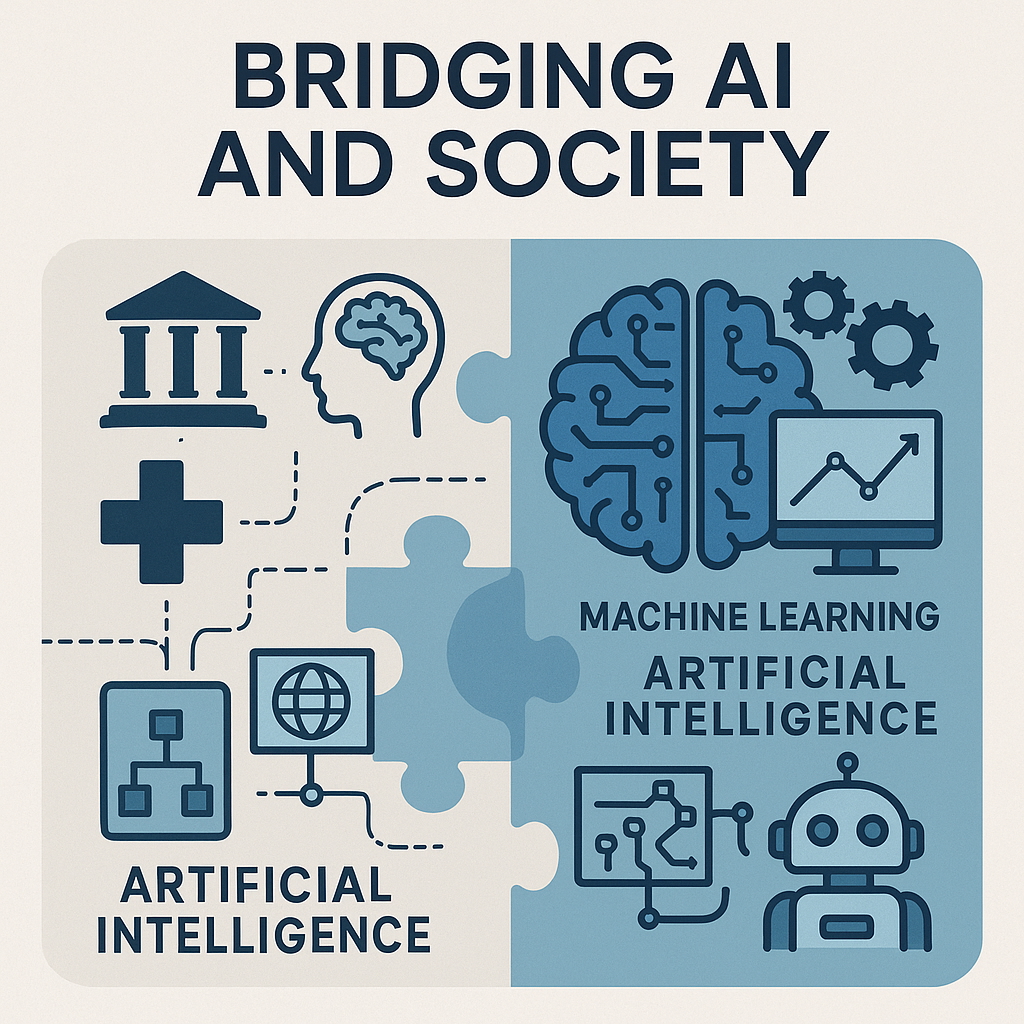
Welcome to the Obertauern 2026 Machine Learning Workshop, part of the summer school program of the German Academic Scholarship Foundation. This modular, hands-on and discussion-driven workshop introduces core concepts of machine learning, the latest developments in modern AI, practical tools for data analysis, and the societal consequences of these technologies. It is designed for participants from diverse academic backgrounds and takes place in the Austrian Alps.
Whether you come from the natural sciences, social sciences, law, or the humanities, this interdisciplinary workshop is accessible, thought-provoking, and interactive. The goal is to make machine learning and modern AI understandable and relevant — while encouraging critical reflection on how these technologies shape research, institutions, and everyday life.
🧭 Course Structure
The course consists of five interconnected components that blend foundational knowledge, interactive practice, and critical reflection:
🧠 1. Technical Sessions
Over four 90-minute sessions, we build a conceptual arc from the foundations of supervised learning through to modern AI systems. Sessions are structured around student mini-presentations — participants engage with the material actively rather than passively.
- Session 1 — Classification & Evaluation — how machines learn to assign categories; confusion matrices, precision/recall, cross-validation
- Session 2 — Regression & Model Complexity — predicting continuous values; the generalisation problem; regularisation
- Session 3 — Trees, Ensembles & Neural Networks — from interpretable decision trees to random forests and neural networks; how they learn and why they work
- Session 4 — Modern AI: LLMs, RAG & Agents — the paradigm shift from classical ML to foundation models; how large language models work; retrieval-augmented generation; autonomous agents
The focus throughout is on building intuition and insight — not mathematical depth — so that all participants can confidently engage with and critically evaluate ML systems in their own fields.
💻 2. Python for Data Science Workshop
A hands-on introduction to Python for data science and machine learning. No prior programming experience is required.
Working in browser-based Jupyter notebooks, participants learn to:
- Use Python for basic logic, data manipulation, and visualisation
- Work with structured data using
pandasandmatplotlib - Train and evaluate simple models with
scikit-learn
➡️ Browse the Python course on GitHub
🔎 3. Hands-On ML Sessions
Four 60-minute interactive sessions in which participants use real code to explore how machine learning models behave — from visualising decision boundaries to experimenting with training processes and, in the final session, working with modern AI tools.
All materials run directly in the browser via Google Colab — no installation needed. These sessions aim to reinforce concepts from the technical track, make model behaviour tangible, and build intuition through guided experimentation.
For participants with prior programming or ML experience, a set of optional coding challenges is also available — short projects using real-world datasets to explore the societal impact of AI through applied work.
➡️ Explore the notebooks on GitHub
➡️ Try the advanced coding challenges on GitHub
🌍 4. Societal Topic Sessions
Four sessions that zoom out and ask: What are the real-world consequences of AI?
These are participant-led, discussion-based conversations that draw on the group’s disciplinary diversity. Sessions run 90 minutes to allow space for genuine debate and disciplinary breadth.
Core themes:
- 🧭 The EU AI Act and how AI regulation compares across the EU, China, and the US
- 🏥 AI in healthcare and medicine — promises, pitfalls, and ethical fault lines
- 📣 AI-generated misinformation, deepfakes, and the challenge of detection
- 💼 Automation, the future of work, and what policymakers and individuals can do
Rather than seeking definitive answers, these sessions aim to sharpen critical thinking and connect technical understanding with societal impact.
This course has been field-tested in interdisciplinary settings — including university workshops and summer schools — with participants from physics, law, philosophy, economics, biology, linguistics, and beyond. It is designed to be inclusive, flexible, and deeply engaging — regardless of prior experience.
📅 Course Information
The course is part of the summer academy program of the Studienstiftung des Deutschen Volkes. Registration is now closed.
We look forward to seeing you in Austria!