About Our Team & Mission
Artificial intelligence and machine learning are reshaping how we live, work, and think. Yet education in these areas is often fragmented — either highly technical or focused only on societal debates.
Our project exists to bridge this gap. We bring technical foundations and societal perspectives together in one classroom, creating space for students from diverse disciplines to learn, question, and collaborate.
Philosophy
Our team believes that AI and machine learning education should not remain the domain of specialists alone. We deliver an approach that is accessible to all, hands-on by design, and deeply critical of the impact these technologies have on our world.
Our courses are designed to be both practically useful and thought-provoking, equipping participants with skills and perspectives they can carry into their own fields.
Our Approach
Our teaching is built on three guiding principles that define every course we lead:
- Accessibility — We make machine learning approachable for participants from diverse academic backgrounds. Concepts are introduced with clarity and intuition, without assuming prior technical knowledge.
- Active Learning — Instead of passive lectures, we focus on interaction, experimentation, and discussion. Participants work with real examples and bring in perspectives from their own fields.
- Societal Perspective — Technical ideas are always connected to broader questions. We explore the ethical, legal, and societal implications of AI alongside its methods.
Flexible Formats
We adapt our courses to different academic settings and goals. Depending on the context, this may mean:
- Short Workshops — Compact sessions providing a focused introduction.
- Multi-day Academies — Intensive programs combining technical modules, practical exercises, and interdisciplinary discussions.
- Guest Lectures — Thematic modules enriching existing university or scholarship curricula.
Who We Are
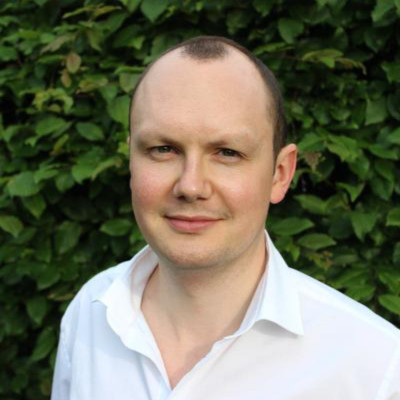
Prof. Dr. Christoph Weisser
Professor of Mathematics, in particular Business Data Science
HSBI
Ph.D. in applied statistics
Research: applied statistics and data science, forecasting, agentic systems
Passionate about teaching and business data science
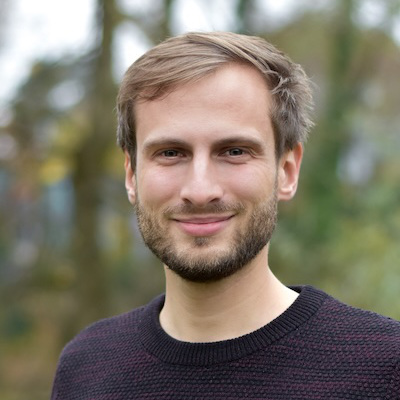
Dr. Knut Zoch
Physicist
Research Fellow
CERN
Ph.D. in experimental particle physics
Research: big data analytics at CERN, machine learning for science
Passionate about teaching and interdisciplinary science
Experience
Since 2019, our courses have been part of summer academies and workshops across Europe, often in collaboration with the Studienstiftung des Deutschen Volkes (German National Academic Foundation) and other academic partners.
Recent locations include Cambridge, UK, Ljubljana, Slovenia, and Banz Abbey, Germany. You can find a full list of our past editions and specific course materials in our Courses section.
Open Resources
All of our teaching materials are open-source and freely available on our GitHub organisation page:
- Hands-On Notebooks – Colab-ready exercises for interactive ML learning
- Python for Data Science – A beginner-friendly crash course covering Python, pandas, and scikit-learn
Each repository includes setup instructions, example projects, and modular content blocks for educators and learners alike.